

A small production company office in a converted Los Angeles warehouse, a long wooden table with laptops and scripts, two people talking by a corkboard of index cards

Every inquiry answered within the hour. Every bid, deliverable, and invoice chased by morning.

A small crew of AI agents takes the office work off your company: the reply to every brand, agency, and filmmaker who writes in, the follow-up on every bid that hasn't closed and every deliverable that hasn't landed, and the option dates, payment terms, and festival deadlines nobody should have to carry in their head. All of it in your company's voice, none of it sent until you say so, and you get back to the work that needs a producer.

Built for independent production companies in Los Angeles: commercial, branded, documentary, and narrative. Runs alongside the tools you already use.

Book a free 45-minute assessment

Why this exists

Most independent production companies run on two or three people and a phone full of freelancers. The founder produces, pitches, and answers the inbox. The one coordinator handles bids, crew, vendors, and deliverables. Between jobs, the general inbox fills with agencies asking for a treatment by Thursday, filmmakers submitting projects, vendors chasing a PO, a client asking where the final files are, and a festival asking for the DCP. During a job, all of it waits until wrap. Very few companies have the help the job needs: someone on the inbox, someone chasing the bids that went quiet, someone watching the invoices and the option dates. The reason is margins, almost never effort. That kind of help is a salary, and the money goes into the crew, the gear, and the next pitch, in that order.

A bid goes out to an agency and nobody follows up, and the job goes to the company that did. A client's final deliverables are late because the vendor's invoice was never approved. A net-60 invoice is at day 95 because nobody wanted to make the awkward call during the next job. An option on a book expires because the date was in a PDF nobody opened. A filmmaker who submitted a project in March never hears back, and tells everyone. None of it is hard. There's just too much of it, and all of it waits for the same two people.

At some point we stopped thinking the answer was “find the overhead for one more coordinator” and started thinking there had to be a better way for a company this size to support itself between jobs. That's what Second Unit is.

It isn't for every company. If you have a head of production, a production accountant, and an office manager, you don't need this. If you don't, and the same two people are producing the job and running the office, we built this for you.

The bid that went out Tuesday and never got a follow-up went to the company that called Friday. They had the better reel. Nobody had the hour.

The same crew we run our own business on

Second Unit is built and run by Noettic Labs, a Los Angeles studio that builds with AI to solve real business problems. We build products that do real work, and we install crews that do it inside your business: the quotes, the follow-ups, the renewals, the records, the reports, the paperwork that keeps a company moving and keeps its best people from doing any of it.

The crew on this page is the system we use to run our own business. We sat down with the people doing the best work with agents, kept what held up under a real week, and wrote it into the job cards and rules every crew ships with. An install is that system, set up on your business, by hand, on a call.

Second Unit is one of several products from Noettic Labs. See what else we've built.

What we built for you

Job CardInquiry Desk
One Job
Job
Draft a reply to every agency, brand, filmmaker, vendor, and crew email within the hour, in the company’s voice, and route the ones a producer must see.
Reads
The general inbox, the website form, your rate card, your calendar, your rules on what gets a reply and what gets a meeting.
Writes
A draft reply, a row in your contact list, a task for the right person.
Never
Sends. Quotes a rate that isn’t on your card. Commits a crew member, a date, or a budget. Says anything about a project under NDA.
Reports to
Your Second Unit Lead, in the daily status.
Checked by
You, before anything goes out.

Second Unit is a service. There's no software for you to learn. We install a small crew of AI agents in your own accounts, one job each, and train each one on how your company works: your voice, your rate card, your clients, your rules. An inquiry desk that drafts a reply to every agency, brand, filmmaker, vendor, and crew email within the hour and routes new business and anything under NDA to a producer. A bid and deliverables follow-up agent that chases every open bid on a schedule until it closes or dies, and follows every job from wrap to final delivery until the client has the files and the vendors are paid. A contract and payment tracker that holds every option date, payment term, insurance renewal, and festival deadline in one record and drafts the note before it's late. The crew works alongside Frame.io, Wrapbook, QuickBooks, Airtable, or whatever you already run; that stays your system of record. Between them they take hours of office work off every week, and you approve every one before it goes out.

A word about AI. These are tools for the office work. They answer the email, chase the bid, and draft the reminder. They don't write your treatment, pick your crew, price a job your rate card doesn't cover, or say anything about a project under NDA. The creative call, and the client relationship, stays with you.

The name is yours before it's ours. On a set, the second unit shoots everything that doesn't need the director: the establishing shots, the inserts, the driving scenes. The director keeps the scenes that need them. Same deal here. The agents take the replies, the chasing, and the dates. You keep the pitch, the client in the room, and the work.

A small film set during a break, a producer at the video village cart with a tablet beside the camera dolly
Wrap plus two weeks. Every job that's wrapped and not yet closed has a row: what the client has, what they're still owed, which vendor invoices are in, and a drafted note for each gap, in your voice.

Three jobs, one company

Draft · not sent
ToMorgan Lee, Fieldhouse AgencySubjectRe: Treatment and bid for the spring campaign

Morgan, thanks for sending the brief over, and for thinking of us. We'd love to bid this. Two quick things so the number is right the first time: is the shoot one day or two, and is the deliverable set the three spots plus cutdowns, or is there social as well?

We can have the treatment and the bid to you by Thursday end of day. If Thursday's too late for your timeline, tell me and I'll move things.

Looking forward to it.

Best,
Sam, Halfway House Films

Inquiry Desk

Every email from an agency, a brand, a filmmaker, a vendor, a crew member, or a festival gets a drafted reply within the hour, in your voice, from your rules: what gets a bid, what gets a meeting, what gets a polite no, what a day rate looks like. It knows what may be answered from the rate card and what needs a producer, and it routes new business, anything under NDA, and anything about money to the right person the same hour.

Reads: the inbox, the form, your rate card, your calendar. Writes: a draft, a contact, a task. Never: sends, quotes a rate off the card, commits a crew member or a date.



Monday morning, in your drafts

Morgan, checking in on the bid · one question, no pressure
Northline, finals on schedule · Friday delivery confirmed
Blue Oak, the treatment · a second option offered
Carver, the last two invoices · POs attached, net 30
Tandem, the social bid · holding the date through Friday
1 bid marked dead, closed out
Five rows read, five follow-ups drafted, one closed out, nothing lost.
Bid and Deliverables Follow-up

Every bid that goes out gets a follow-up on your schedule, day 3, day 8, day 15, in your voice, until it books, dies, or the client says not this time. Every job that wraps goes into a delivery record: what the client has, what's owed, which vendor invoices are in, which crew is paid. It drafts the note for each gap and tells you every Monday which jobs are clean and which are at risk. Open bids and unclosed jobs are where a small company leaks money, and the fix is a note that gets sent.

Reads: your bids, your delivery folders, your vendor invoices. Writes: follow-up drafts, a status per bid and per job. Never: changes a number, approves an invoice, sends.
Draft · 45 days out
ToRachel Imani, Imani LiterarySubjectThe option on "Still Water" and next steps

Hi Rachel,

A note ahead of time: our option on Still Water runs through the 30th of next month. We're in active conversations with two financiers and would like to extend for another twelve months on the terms in the agreement.

If the author would rather revisit terms, I'd welcome the conversation. Either way, I wanted you to hear from us well before the date, not at it.

Best,
Sam

Contract and Payment Tracker

Every client agreement, option, vendor deal, insurance policy, and festival submission goes into one record: the payment terms, the option dates, the renewal dates, the deadlines. The agent watches the dates and drafts the note before it's late: the invoice reminder at 30, 45, and 60, the option extension 45 days out, the insurance renewal, the festival deliverable. You stop finding out from the lawyer, the vendor, or the festival.

Reads: the agreements, the calendar, your invoices. Writes: the record, a reminder, a draft. Never: changes a term, a rate, or a date, sends.

Meet the crew

Each agent is set up for one job, the way you'd brief a new coordinator on day one: the instructions for that job, the rules it works inside, the skills it needs, and nothing else. Your inquiry desk knows your rate card. Your follow-up agent knows every open bid and every unclosed job. Your tracker knows every date.

Start with one. Add the next when you're ready. The Second Unit Lead comes with any setup and ties them together.

Needs youThe reply to Fieldhouse Agency about the spring campaign bid
ApproveNot now
Done today17 tasks · 4 agents
Daily status sent, one thing waiting on youSecond Unit Lead
Drafted 11 replies to agency, vendor, and crew emailsInquiry Desk
Followed up on 5 open bids, 2 jobs still owed deliverablesBid and Deliverables Follow-up
Still Water option is 45 days out, note draftedContract and Payment Tracker
  1. Second Unit LeadIncluded with any setup

    Your first agent. Runs the daily status, keeps your queue to one request at a time, and walks you through changes to the other agents so you never need us for a small tweak.

  2. Inquiry DeskLaunch agent

    Drafts a reply to every agency, brand, filmmaker, vendor, and crew email within the hour, from your rate card and your rules, and routes new business and anything under NDA to a producer.

  3. Bid and Deliverables Follow-upLaunch agent

    Chases every open bid on your schedule until it closes or dies, and follows every wrapped job until the client has the finals and the vendors are paid.

  4. Contract and Payment TrackerLaunch agent

    Keeps every option date, payment term, insurance renewal, and festival deadline in one record and drafts the note before it’s late.

  5. Crew and Vendor DeskOn the menu

    The availability check, the deal memo draft from your template, the call-sheet confirmation, and the thank-you after wrap.

  6. Submissions DeskOn the menu

    The acknowledgment to every filmmaker and writer who submits, the log, the polite pass in your voice, and the flag when something fits your slate.

  7. Festival DeskOn the menu

    The submission calendar for each finished film, the deliverables each festival wants, and the follow-up when a festival goes quiet.

  8. MarketingOn the menu

    The case study for each finished job, the quarterly note to past clients, and the reel-update announcement, from your own words.

Once you say yes: what you get in the first week

Nothing is left for you to figure out. This is what we set up, and when.

  1. Day 1Installed and Running.

    Your Second Unit Lead and your Inquiry Desk are set up on your own accounts, interviewed on your voice, your rate card, and your rules, and one real inquiry is answered before we end the call.

  2. Day 2The Inbox Stops Waiting on Wrap.

    Every new email has a drafted reply within about an hour, with the right rate and the right date. Your coordinator reads, edits if they like, and sends.

  3. Day 3First Check-in.

    We read the week's drafts together, note what you changed, and tighten the rules so the next ones need less of your hand.

  4. Day 7Your First Number.

    How many drafts went out untouched. It's the one figure we track from here, and it tells you whether this is keeping you on the job instead of in the inbox.

Shooting in week one? Your Inquiry Desk drafts every reply the hour it comes in, and your follow-up agent keeps chasing last month's bids and last month's invoices while you're on set.

How it works

  1. Assessment.

    A free 45-minute call. We find the tasks that are eating your company's week and match them to the agent that can take them over.

  2. Install.

    Everything works from day one, and you don't set up a thing alone. We help you sign up for Grok Bot, and for Notion if you don't have it yet, both on your own accounts. Then, in one screen share, we install the agents, connect your email and calendar from your side, and run the interview that teaches them your voice, your rate card, your clients, and your rules. We walk you through the whole thing and check every piece before we hand them off to you.

    Runs on
  3. Two Weeks of Tuning.

    We read the drafts with you every few days and tighten the agent until most go out with no edits. Then a monthly check-in, and the next agent setup when you want it.

  4. Most companies are running within a week of the assessment.

Everything that comes with a crew

One price, once. Beside each piece is what the same work costs when you buy it as a person's time. Rough US figures, so you can see what you're getting.

We start four new businesses a month.By hand, on a call, so each one gets the tune-up it needs.
What's in the BoxThe Three-Agent Crew
  1. The Assessment45 minutes with us to find the tasks eating your week and the agent for each.
    $250
  2. Install DayOne screen share. Agents installed in your own accounts, email and calendar connected from your side.
    about $1,200
  3. The InterviewYour voice, your prices, your rules, written into every agent before it drafts a word.
    about $600
  4. Three Launch AgentsInquiry Desk, Bid and Deliverables Follow-up, Contract and Payment Tracker. The same three jobs as hires.
    $5,000 to $12,500 a month
  5. Your Second Unit LeadDaily status, one request at a time, and the walkthrough for every small change.
    included
  6. Two Weeks of TuningWe read the drafts with you on days 3, 7, 10, and 14, and tighten the rules each time.
    about $1,000
  7. Job Cards and Rules, Yours to KeepEvery agent's instructions on paper, in your Notion, so the crew stays with you.
    about $500
Bought as people and consultants, the first month aloneabout $8,500 to $16,000
Your crew, once$2,500 to $6,000
Then about $50 a month in software, paid to Grok Bot and Notion.
The Tune-up Guarantee.

If most of your drafts aren't going out untouched by the end of the two-week tune-up, we keep tuning at no charge until they are.

What it costs

Priced to the size of your company, and settled on the assessment call, not before. A two-person shop sits at the low end of each range. A company with a staff of ten and a slate sits at the high end.

Setup, per agentRange
One Agent, Set Up and Tuned
The assessment, the install, the interview, and two weeks of tuning.
$1,000 to $2,500
The Three Launch Agents Together
Inquiry Desk, Bid and Deliverables Follow-up, Contract and Payment Tracker.
$2,500 to $6,000
The Whole Crew
All eight agents, installed a week apart so each gets its tuning.
$6,500 to $16,000

Then Pick One of Two Paths

Ongoing Care

$100 to $750 a month per agent, scaled the same way. A monthly check-in, tuning as your company changes, support when something's off, and the next agent when you want it. Ninety days minimum, then month to month with 30 days' notice.

Setup Only

No monthly fee. Your Second Unit Lead agent walks you through changes to the other agents yourself, and when you'd rather we did it, we're on call by the hour.

The assessment call is free, and there's nothing to decide until it's done. You pay for your own software: about $30 a month for Grok Bot and about $10 a month per seat for Notion, paid to them, not to us.

What the Same Help Costs as People

Rough US figures for hiring the equivalent, so you can see what you're getting. These are estimates.

If You Hired People$60,000 to $150,000a year
  • Production coordinator$52,000 to $70,000 / yr
  • Office manager and bookkeeping$50,000 to $65,000 / yr
  • Freelance production accountant$2,500 to $5,000 / mo
  • Executive assistant to the founder$55,000 to $75,000 / yr
  • New-business and marketing coordinator$50,000 to $68,000 / yr

Before payroll taxes, before benefits, and before they've learned how you like things done.

Your Second Unit Crew$2,500 to $6,000once, the three launch agents$6,500 to $16,000once, the whole crew
  • Works every day, prep week and shoot week included
  • Trained on your voice, your rate card, your clients
  • About $50 a month in software, paid to Grok Bot and Notion
  • Ongoing care from $100 a month per agent, or setup only with support on call
  • Yours to keep. If we part ways, the crew stays with you

Three agents for about one month of one salary.

What the agents won't do

What changes

The agency that wrote Tuesday has a reply in your drafts within the hour, with the two questions that make the bid right. Last month's open bids are five follow-ups on Monday morning, and you send them from set. The option conversation starts 45 days early with a draft waiting, instead of the week it expires.

You still write the important emails. You just stop writing all of them.

Book a free 45-minute assessment Not ready? Read what the agents won't do and see exactly what they read, write, and never touch.
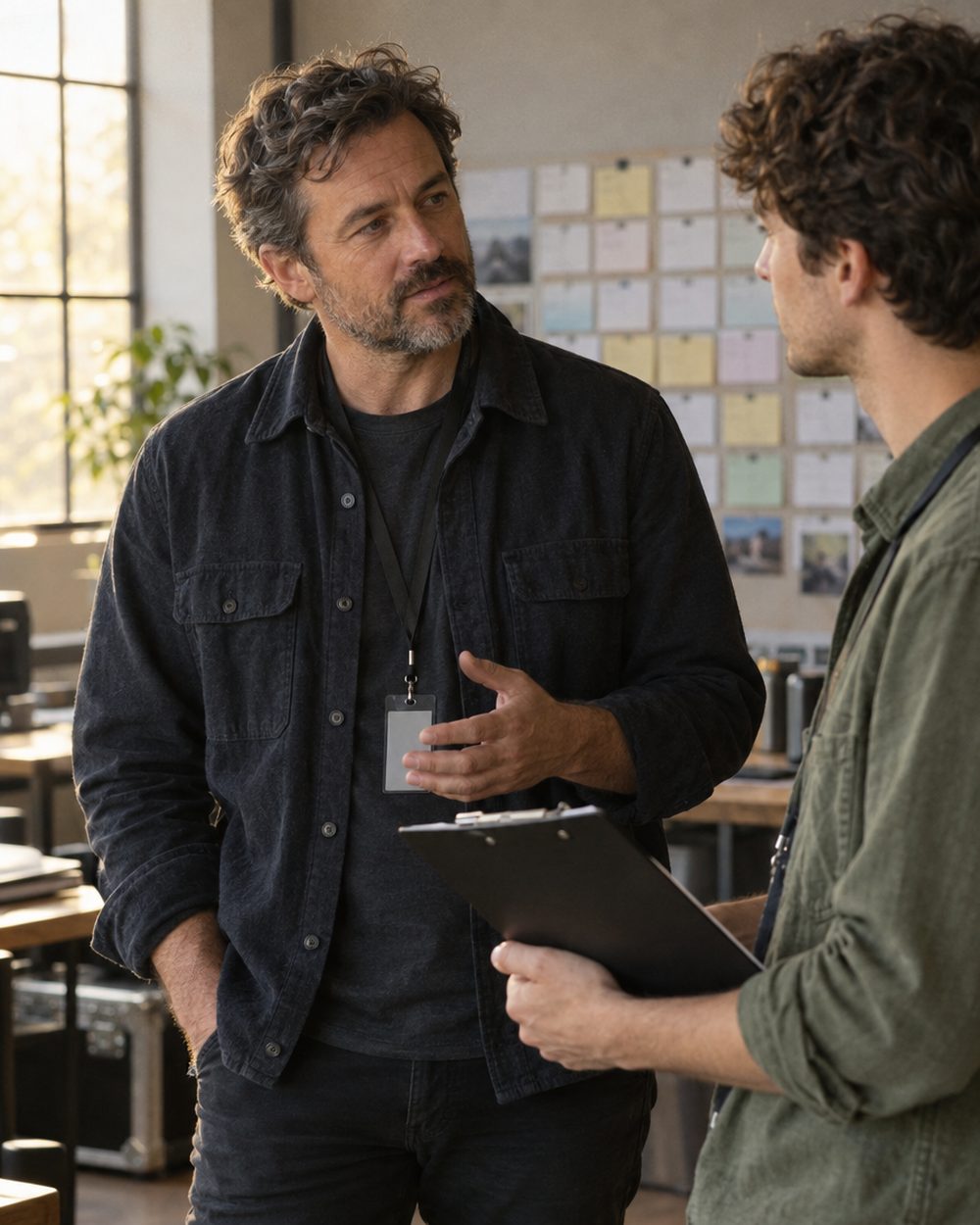
A producer in a production office talking with a coordinator holding a clipboard
Every open bid is a conversation someone has to keep going.