

A quiet contemporary art museum gallery with four visitors looking at large abstract paintings and a staff member by the doorway

Every inquiry answered within the hour. Every donor thanked by morning.

A small crew of AI agents takes the office work off your week: the reply to every inquiry that lands in the general inbox, the thank-you to everyone who came to the opening, and the grant reports, loan terms, and renewal dates nobody should have to carry in their head. All of it in your institution's voice, none of it sent until you say so, and your small staff gets its afternoons back.

Built for museums, art centers, historical societies, and cultural nonprofits. Runs alongside the systems you already use.

Book a free 45-minute assessment

Why this exists

Most museums and cultural nonprofits run on a staff that's a third the size the work calls for. The director writes grant reports at night. The one development person runs membership, the gala, and the annual appeal. The front desk forwards every inquiry to whoever might know, and it waits there. Image-rights requests, group-visit bookings, press questions, a lender asking about their painting, a donor who gave in March and hasn't heard a word since: all of it lands in the same general inbox, and all of it waits for the same four people. Very few institutions have the help the job needs. The reason is the budget, almost never effort. That kind of help is a salary, and the money goes into the program, the building, and the collection, in that order.

An inquiry about a group visit sits for ten days and the school books somewhere else. The members' opening draws 200 people and 12 of them hear from you afterward. A grant report is due Friday and the data is in four places. A loan term ends and you find out when the lender's registrar writes. The lapsed-member list is three years old because nobody has had a week to work it. None of it is hard. There's just too much of it, and all of it waits for a staff that's already stretched.

At some point we stopped thinking the answer was “find the funding for one more position” and started thinking there had to be a better way for a small institution to support itself. That's what Second Unit is.

It isn't for every institution. If you have a visitor services team, a development office, and a registrar, you don't need this. If you don't, and the same few people are doing all three jobs between exhibitions, we built this for you.

The donor who gave in March and heard nothing by June gives somewhere else in December. They were ready. Nobody had the week to write.

How I know

I'm Chris Davies. I've run Fabrik Projects Gallery in Los Angeles for 16 years, I published Fabrik Magazine for 14, and I founded Photo Independent, a fair I produced with a staff smaller than most museum departments. In that time I've worked with institutions from every side: lending work, covering their shows, sitting on their panels, and watching the same three people run the front desk, the membership drive, and the grant report in the same week.

Every pain on this page is one I've seen up close or had myself. The inquiry that waited a week because the person who could answer it was installing a show. The sign-in book from the members' opening that never became a thank-you. The loan agreement whose return date surprised everyone. I built Second Unit for my own gallery first. This is the version for your institution.

What we built for you

Job CardInquiry Desk
One Job
Job
Draft a reply to every inquiry in the general inbox within the hour, in the institution’s voice, and route the ones a person must see.
Reads
The general inbox, the website forms, your hours and admission, your group-visit and rights policies, your collection records.
Writes
A draft reply, a row in your contact list, a task for the right person.
Never
Sends. Quotes a loan fee, a rights fee, or a rental rate that isn't in your policy. Confirms a booking the calendar can't hold.
Reports to
Your Second Unit Lead, in the daily status.
Checked by
You, before anything goes out.

Second Unit is a service. There's no software for you to learn. We install a small crew of AI agents in your own accounts, one job each, and train each one on how your institution works: your voice, your policies, your calendar, your rules. An inquiry desk that drafts a reply to every question in the general inbox within the hour and routes rights requests, press, and lenders to the right person. A donor and member follow-up agent that turns the sign-in sheet from the opening into thank-you notes by the next morning and keeps the lapsed-member list moving. A grant and loan tracker that holds every report deadline, every loan term, and every renewal date in one record and drafts the note a month before. The crew works alongside Blackbaud, Tessitura, Altru, PastPerfect, or whatever you already run; that stays your system of record. Between them they take hours of office work off every week, and you approve every one before it goes out.

A word about AI. These are tools for the office work. They answer the inquiry, thank the donor, and draft the report reminder. They don't write your curatorial text, decide who gets a rights license, or speak for the institution on anything a board would want to see first. What goes on the wall, and what the institution says in public, stays with you.

The name comes from film. On a set, the second unit shoots everything that doesn't need the director: the establishing shots, the inserts, the driving scenes. The director keeps the scenes that need them. Same deal here. The agents take the replies, the thank-yous, and the dates. You keep the exhibitions, the donors who want a conversation, and the work.

A museum members' opening reception, guests with wine in a white gallery, a sign-in table with name cards and a guest book in the foreground
The members' opening, the morning after. Every name on the sign-in sheet is in your contact list with the visit logged, and every person has a thank-you waiting in your drafts, in your voice, with the show they came to see.

Three jobs, one institution

Draft · not sent
ToMs. Delgado, Lincoln Middle SchoolSubjectRe: Group visit for 60 seventh graders

Dear Ms. Delgado, thank you for thinking of us for your seventh graders. We'd be glad to host 60 students. For a group that size we run two guided tours of 30, about 50 minutes each, and we have Tuesday the 12th or Thursday the 21st open in the morning.

School groups visit free, and we ask for one adult per ten students. I've attached our group-visit guide with the arrival details and the lunch space.

Reply with the date that works and I'll hold it for you.

Warm regards,
Ana, Visitor Services, Harbor Museum of Art

Inquiry Desk

Every question that lands in the general inbox or the website form gets a drafted reply within the hour, in your voice: hours and admission, group visits, facility rentals, image and rights requests, donation offers, and the lender asking about their painting. It knows what may be answered from policy and what needs a person, and it routes press, lenders, and anything legal to the right desk the same hour.

Reads: the inbox, the forms, your policies, your calendar. Writes: a draft, a contact, a task. Never: sends, quotes a fee that isn't in policy, confirms a date the calendar can't hold.



The next morning, in your drafts

Robert and Joan, thank you for coming · the new acquisition they asked about
Dr. Osei, so glad you could join us · curator talk on the 18th
Teddy, welcome to the museum · member guide attached
Sofia, the press images · release and captions attached
The Nakamuras, it was good to see you · renewal note, no hard sell
1 name unreadable, left for you
Five people read, two new contacts, five drafts, one line for a person to fix.
Donor and Member Follow-up

Photograph the sign-in sheet the morning after an opening, a talk, or the gala and upload it. By the time you've had coffee, every name is in your contact list, every visit is logged, and every person has a personal thank-you waiting in your drafts. After a gift, it drafts the acknowledgment the same day and the six-month check-in on schedule. Every Monday it drafts a light note to ten lapsed members, oldest first.

Reads: the photo, your contacts, the program. Writes: contacts, visits, drafts. Never: guesses an email, states a gift amount in writing without your yes, sends.
Draft · 30 days out
ToMargaret Chen, Registrar, Westbrook FoundationSubjectLoan of Untitled (1974) ends 14 December

Dear Margaret,

A note ahead of time: the loan agreement for Untitled (1974) ends on the 14th, when the exhibition closes. We'd like to discuss extending the loan into our permanent-collection installation in the spring, on the same terms.

If the Foundation would rather have the work back as scheduled, I'll confirm the return shipping and condition report dates with you next week.

With thanks,
David, Harbor Museum of Art

Grant and Loan Tracker

Every grant, every loan agreement, and every membership tier goes into one record: the report deadlines, the loan terms and insurance values, the renewal dates. The agent watches the dates and drafts the note 30 days out: the report reminder with the data you'll need listed, the loan extension or return note, the renewal letter. You stop finding out from the funder or the lender.

Reads: the agreements, the calendar, your records. Writes: the record, a reminder, a draft. Never: changes a term, an insurance value, or an owner.

Meet the crew

Each agent is set up for one job, the way you'd brief a new coordinator on day one: the instructions for that job, the rules it works inside, the skills it needs, and nothing else. Your inquiry desk knows your policies. Your follow-up agent knows every member by name. Your tracker knows every deadline.

Start with one. Add the next when you're ready. The Second Unit Lead comes with any setup and ties them together.

Needs youThe reply to Lincoln Middle School about the group visit
ApproveNot now
Done today17 tasks · 4 agents
Daily status sent, one thing waiting on youSecond Unit Lead
Drafted 9 replies to general-inbox inquiriesInquiry Desk
Read the opening's sign-in sheet, 48 thank-yous draftedDonor and Member Follow-up
Westbrook loan ends in 30 days, note draftedGrant and Loan Tracker
  1. Second Unit LeadIncluded with any setup

    Your first agent. Runs the daily status, keeps your queue to one request at a time, and walks you through changes to the other agents so you never need us for a small tweak.

  2. Inquiry DeskLaunch agent

    Drafts a reply to every inquiry in the general inbox and the website forms within the hour, from your policies, and routes press, lenders, and rights requests to the right person.

  3. Donor and Member Follow-upLaunch agent

    Turns every sign-in sheet into thank-you notes by the next morning, drafts gift acknowledgments the same day, and works the lapsed-member list every Monday.

  4. Grant and Loan TrackerLaunch agent

    Keeps every grant deadline, loan term, and renewal date in one record and drafts the note 30 days before each one.

  5. Education DeskOn the menu

    Group-visit and school bookings, the confirmation with the arrival guide, the teacher follow-up, and the term calendar.

  6. Press DeskOn the menu

    The press release for each exhibition, the image and caption pack, the pitch to each outlet on your list, and the follow-up when nobody answers.

  7. MarketingOn the menu

    The member newsletter on a schedule, the exhibition announcement, and the annual-appeal draft, from your own words.

  8. SocialOn the menu

    The post calendar for each exhibition, one caption per work or program, and drafted replies to the comments and DMs you forward.

Once you say yes: what you get in the first week

Nothing is left for you to figure out. This is what we set up, and when.

  1. Day 1Installed and Running.

    Your Second Unit Lead and your Inquiry Desk are set up on your own accounts, interviewed on your voice, your policies, and your rules, and one real inquiry is answered before we end the call.

  2. Day 2The Inbox Stops Waiting on the Front Desk.

    Every new inquiry has a drafted reply within about an hour, with the right policy and the right date. Your staff reads, edits if they like, and sends.

  3. Day 3First Check-in.

    We read the week's drafts together, note what you changed, and tighten the rules so the next ones need less of your hand.

  4. Day 7Your First Number.

    How many drafts went out untouched. It's the one figure we track from here, and it tells you whether this is giving your staff its afternoons back.

Have an opening in week one? Your Inquiry Desk drafts every reply the hour it comes in, and your Donor and Member Follow-up has the thank-yous in your drafts the next morning.

How it works

  1. Assessment.

    A free 45-minute call. We find the tasks that are eating your staff's week and match them to the agent that can take them over.

  2. Install.

    Everything works from day one, and you don't set up a thing alone. We help you sign up for Grok Bot, and for Notion if you don't have it yet, both on your own accounts. Then, in one screen share, we install the agents, connect your email and calendar from your side, and run the interview that teaches them your voice, your policies, your calendar, and your rules. We walk you through the whole thing and check every piece before we hand them off to you.

    Runs on
  3. Two Weeks of Tuning.

    We read the drafts with you every few days and tighten the agent until most go out with no edits. Then a monthly check-in, and the next agent setup when you want it.

  4. Most institutions are running within a week of the assessment.

Everything that comes with a crew

One price, once. Beside each piece is what the same work costs when you buy it as a person's time. Rough US figures, so you can see what you're getting.

We start four new businesses a month.By hand, on a call, so each one gets the tune-up it needs.
What's in the BoxThe Three-Agent Crew
  1. The Assessment45 minutes with us to find the tasks eating your week and the agent for each.
    $250
  2. Install DayOne screen share. Agents installed in your own accounts, email and calendar connected from your side.
    about $1,200
  3. The InterviewYour voice, your prices, your rules, written into every agent before it drafts a word.
    about $600
  4. Three Launch AgentsInquiry Desk, Donor and Member Follow-up, Grant and Loan Tracker. The same three jobs as hires.
    $5,000 to $12,500 a month
  5. Your Second Unit LeadDaily status, one request at a time, and the walkthrough for every small change.
    included
  6. Two Weeks of TuningWe read the drafts with you on days 3, 7, 10, and 14, and tighten the rules each time.
    about $1,000
  7. Job Cards and Rules, Yours to KeepEvery agent's instructions on paper, in your Notion, so the crew stays with you.
    about $500
Bought as people and consultants, the first month aloneabout $8,500 to $16,000
Your crew, once$2,500 to $6,000
Then about $50 a month in software, paid to Grok Bot and Notion.
The Tune-up Guarantee.

If most of your drafts aren't going out untouched by the end of the two-week tune-up, we keep tuning at no charge until they are.

What it costs

Priced to the size of your institution, and settled on the assessment call, not before. A historical society with two staff sits at the low end of each range. A museum with a staff of twenty sits at the high end.

Setup, per agentRange
One Agent, Set Up and Tuned
The assessment, the install, the interview, and two weeks of tuning.
$1,000 to $2,500
The Three Launch Agents Together
Inquiry Desk, Donor and Member Follow-up, Grant and Loan Tracker.
$2,500 to $6,000
The Whole Crew
All eight agents, installed a week apart so each gets its tuning.
$6,500 to $16,000

Then Pick One of Two Paths

Ongoing Care

$100 to $750 a month per agent, scaled the same way. A monthly check-in, tuning as your institution changes, support when something's off, and the next agent when you want it. Ninety days minimum, then month to month with 30 days' notice.

Setup Only

No monthly fee. Your Second Unit Lead agent walks you through changes to the other agents yourself, and when you'd rather we did it, we're on call by the hour.

The assessment call is free, and there's nothing to decide until it's done. You pay for your own software: about $30 a month for Grok Bot and about $10 a month per seat for Notion, paid to them, not to us.

What the Same Help Costs as People

Rough US figures for hiring the equivalent, so you can see what you're getting. These are estimates.

If You Hired People$60,000 to $150,000a year
  • Visitor services and admin coordinator$40,000 to $52,000 / yr
  • Development associate$48,000 to $62,000 / yr
  • Membership coordinator$42,000 to $55,000 / yr
  • Freelance grant writer$2,000 to $5,000 / mo
  • Communications coordinator$45,000 to $60,000 / yr

Before payroll taxes, before benefits, and before they've learned how you like things done.

Your Second Unit Crew$2,500 to $6,000once, the three launch agents$6,500 to $16,000once, the whole crew
  • Works every day, install week and gala week included
  • Trained on your voice, your policies, your calendar
  • About $50 a month in software, paid to Grok Bot and Notion
  • Ongoing care from $100 a month per agent, or setup only with support on call
  • Yours to keep. If we part ways, the crew stays with you

Three agents for about one month of one salary.

What the agents won't do

What changes

The group-visit request that came in Monday has a reply in your drafts by lunch. The members' opening becomes 48 thank-you notes in your drafts the next morning, and you send them before the staff meeting. The loan conversation happens a month early instead of when the lender's registrar writes.

You still write the important emails. You just stop writing all of them.

Book a free 45-minute assessment Not ready? Read what the agents won't do and see exactly what they read, write, and never touch.
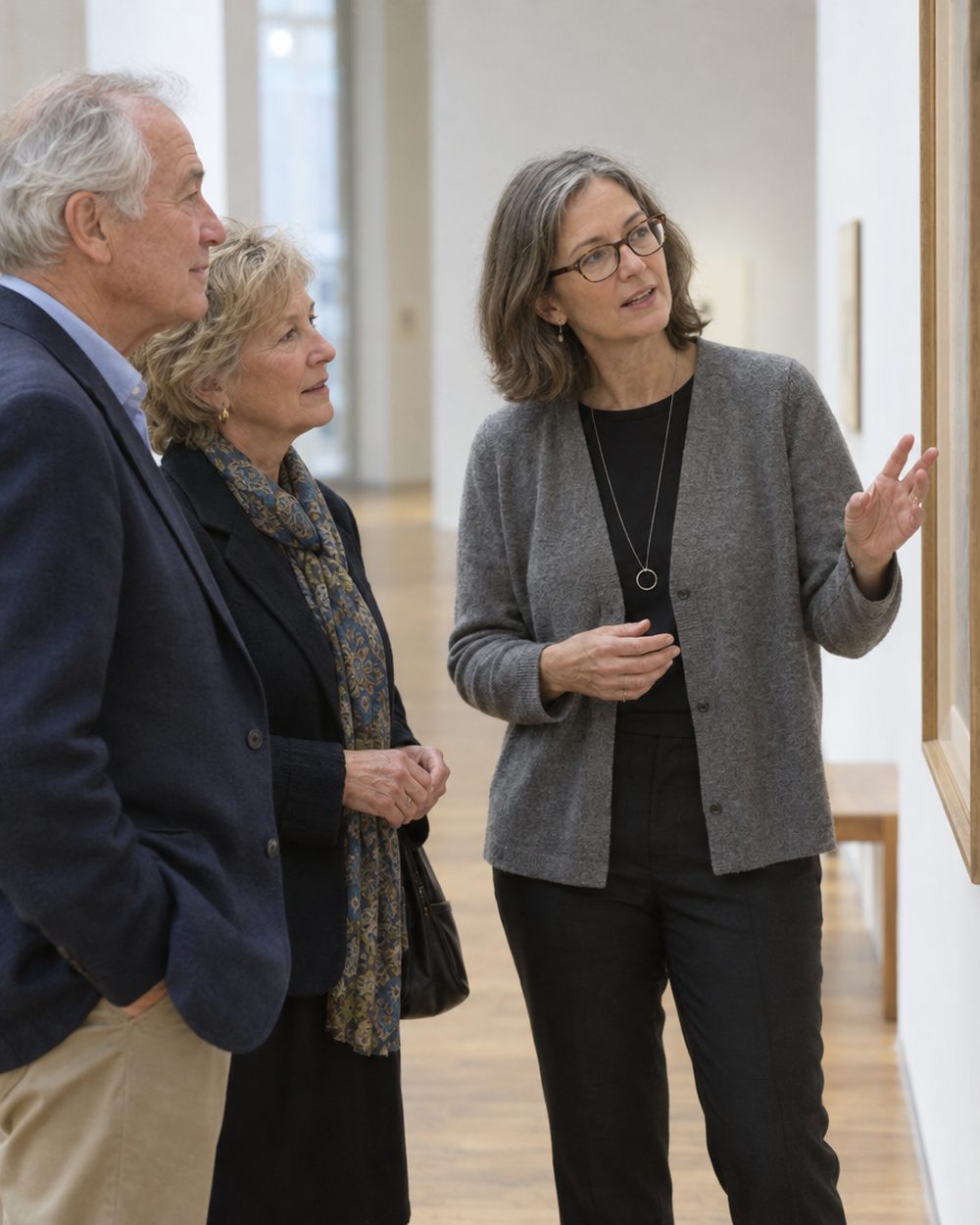
A museum director talking with an older donor couple in a gallery
Every name on the sign-in sheet is a relationship someone has to keep.