Fabrik Projects Gallery, Los Angeles, installation view

Your inquiries answered within the hour. Your opening turned into follow‑ups by morning.

A small crew of AI agents takes the desk work off your week: the collector replies, the follow-ups after every opening and fair, and the consignment dates nobody should have to carry in their head. All of it in your voice, none of it sent until you say so, and the evenings go back to the artists and the room.

Built by a gallery owner.

Book a free 45-minute assessment

Why this exists

Most galleries run lean. Maybe it's you alone, maybe it's you and two others, maybe it's a team with a fair next month. Either way, everything that keeps the lights on runs through the same few people: the sale, the shipping quote, the artist who wants an update, the collector who wants a price, the invoice nobody chased. Very few spaces have the help the job needs: someone on the inbox, someone on the follow-ups after an opening or a fair, someone on the consignment dates, someone on the press note. The reason is margins, almost never effort. That kind of help is a salary, and for most galleries the money goes into the rent, the shows, and the fairs, in that order, with nothing left over.

I've run a gallery for 16 years and produced fairs of my own, and the hardest thing to watch is a good gallery doing everything right and still falling behind on everything that isn't the show. An inquiry comes in during install week and sits for three days. The sign-in book from Saturday's opening is still on the desk on Thursday, and the people in it have cooled. A consignment term ends and you find out when the artist asks for the work back. The press release gets written at midnight because that's the only hour nobody needs you. None of it is hard. There's just too much of it, and all of it waits for the same person.

At some point I stopped thinking the answer was "find the money for one more salary" and started thinking there had to be a better way for a gallery to support itself. That's what Second Unit is.

It isn't for every gallery, and it won't be the right answer for every space. If you already have the right people around you, you don't need this. If you don't, and you've been carrying all of it yourself, I built this for you.

A reply that comes three days late costs you the sale. The collector was serious on Saturday. By Wednesday they bought something else.

Who I am

I'm Chris Davies. I've run Fabrik Projects Gallery in Los Angeles for 16 years, and in that time I've produced art fairs of my own, so I know the week from both sides of the aisle: the gallery that has to answer every collector, and the fair that has to answer every exhibitor. Every pain on this page is one I've had. I've lost sales to a slow reply. I've found a sign-in book from an opening six weeks later. I've written the artist update at 1 a.m.

I built Second Unit for my own gallery first, because I had the same problem: too much that only I could answer, and no room in the budget for another person. It does real work for me every day. This is the version for your gallery.

What I built for you

Second Unit is a service. There's no software for you to learn. We install a small crew of AI agents in your own accounts, one job each, and train each one on how your gallery works: your voice, your prices, your artists, your rules. An inquiry desk that drafts a reply to every collector within the hour. A follow-up agent that turns an opening or a fair weekend into personal notes by morning. A tracker that reads every consignment agreement and never lets a term slip past. Between them they take hours of desk work off every week, the hours that used to come out of your evenings, and you approve every one before it goes out.

A word about AI. These are tools to support a gallery. They answer email, keep records, and draft the paperwork. They don't choose the artists, build the show, or talk to a collector standing in the room, and they never will. That part stays yours.

The name comes from film. On a set, the second unit shoots everything that doesn't need the director: the establishing shots, the inserts, the driving scenes. The director keeps the scenes that need them. Same deal here. The agents take the replies, the follow-ups, and the consignment dates. You keep the conversations that sell the work.

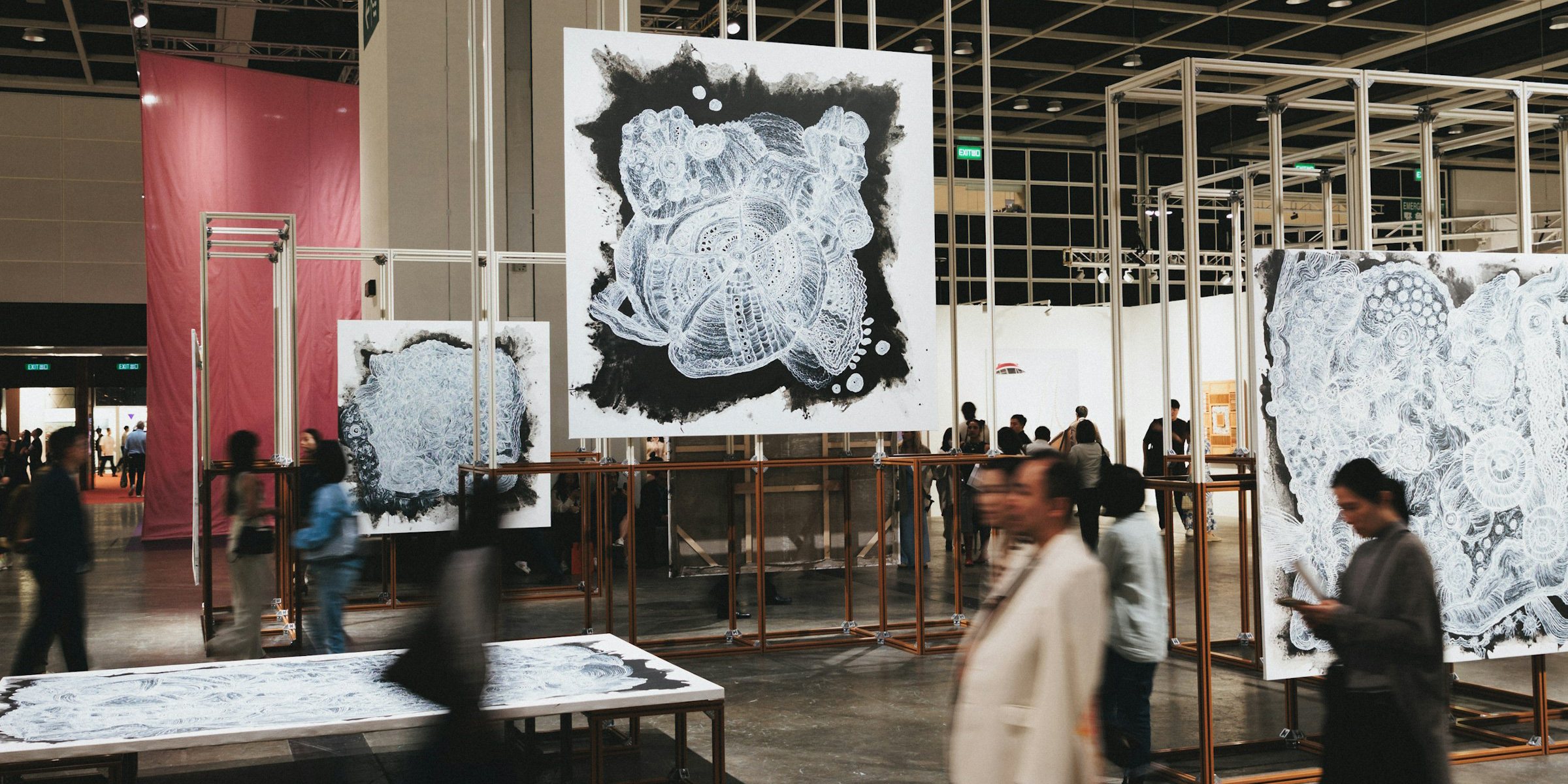
Art Basel Hong Kong, visitors moving between large works on open frames
Art Basel Hong Kong. Four days, a few hundred conversations, and a stack of business cards in your pocket. Photograph the cards at the end of each day, and your Collector Follow-up agent has every name in your contacts, every visit logged, and a personal note drafted for each one, ready for you to read and send before you fly home.

Three jobs, one gallery

Draft · not sent
ToMonica EllisonSubjectRe: Glen Wexler, Pyramid, the large one in the north room

Monica, thank you for your interest in Glen's work. Pyramid is available in the large size you asked about, 54 by 41 inches. I've attached the catalog sheet with pricing.

Glen Wexler, Pyramid, 2024
Glen Wexler, Pyramid, 2024. ChromaLuxe dye sublimation on aluminum, 54 × 41 inches.

If you'd like to see it again in person, I'm at the gallery this week, Tuesday to Saturday, 11 a.m. to 6 p.m.

Best,
Chris

Inquiry Desk

Every email and website inquiry gets a drafted reply within the hour, in your voice, with the right image attached. It knows which prices are public, which are on request, and which are yours alone to discuss. It flags serious collectors to you the same day.

Reads: your inbox, your inventory. Writes: a draft, a note in your contacts. Never: sends, states a price it isn't allowed to.

Sunday morning, in your drafts

Monica, thank you for coming · Pyramid, install view attached
Dele, good to see you Saturday · two of the small works
Jun and Priya, thank you both · the show's anchor work
Tom, the list you asked for · price list on request
Helena, the press text · no sales language
1 line unreadable, left for you
Five people read, three new contacts, five drafts, one line for a person to fix.
Collector Follow-up

Photograph the sign-in book the morning after the opening and upload it. By the time you've had coffee, every name is in your contact list, every visit is logged, and every person has a personal thank-you waiting in your drafts with an image of what they looked at. Nobody who signs the book goes quiet.

Reads: the photo, your contacts, the show. Writes: contacts, visits, drafts. Never: guesses an email, sends.
Draft · 30 days out
ToSonia P.SubjectYour consignment ends 14 December

Hi Sonia,

I hope you're well. The agreement for the six works from the spring show ends on the 14th. Two sold, one is on hold, and three are on the wall and still drawing people in.

We'd like to keep showing them. Shall we extend on the same terms? If you'd rather have them back, let me know and I'll arrange the return.

Best,
Chris

Consignment Tracker

Drop the agreement in a folder. The agent reads the works, the term, the split, and the insurance value, and 30 days before the term ends it drafts the renewal or the return note. You stop finding out from the artist.

Reads: the agreement, the inventory. Writes: the record, a reminder, a draft. Never: changes a term, a price, or an owner.

Meet the crew

Each agent is set up for one job, the way you'd brief a new hire on day one: the instructions for that job, the rules it works inside, the skills it needs, and nothing else. Your inquiry desk knows your price rule. Your follow-up agent knows which work anchors the show. Your tracker knows your artists by name.

Start with one. Add the next when you're ready. The Second Unit Lead comes with any setup and ties them together.

Needs youMonica Ellison's reply about Pyramid
ApproveNot now
Done today17 tasks · 4 agents
Daily status sent, one thing waiting on youSecond Unit Lead
Drafted 4 replies to collector inquiriesInquiry Desk
Read Saturday's sign-in book, 11 thank-you notes draftedCollector Follow-up
Sonia's consignment ends in 30 days, renewal note draftedConsignment Tracker
  1. Second Unit LeadIncluded with any setup

    Your first agent. Runs the daily status, keeps your queue to one request at a time, and walks you through changes to the other agents so you never need us for a small tweak.

  2. Inquiry DeskLaunch agent

    Drafts a reply to every email and website inquiry within the hour, in your voice, following your rule on which prices may be said to whom.

  3. Collector Follow-upLaunch agent

    Reads the sign-in book or a stack of cards, logs every visit, and drafts a personal note per person by morning. Checks in on quiet collectors every Monday.

  4. Consignment TrackerLaunch agent

    Reads every agreement into your records and drafts the renewal or return note 30 days before a term ends.

  5. MarketingOn the menu

    Press release, collector preview, newsletter block, and exhibition page copy for every show, from your own exhibition text.

  6. SocialOn the menu

    The post calendar for the run of a show, a caption per work and install shot, and replies to the DMs you forward.

  7. Production DeskOn the menu

    The checklist behind every show and fair, from framing to deinstall, with vendor nudges drafted on the day they're due.

  8. Artist LiaisonOn the menu

    One update per represented artist each month: what sold, what's on hold, what's coming up, and what you need from them.

Once you say yes: what you get in the first week

Nothing is left for you to figure out. This is what we set up, and when.

  1. Day 1Installed and Running.

    Your Second Unit Lead and your first agent are set up on your own accounts, interviewed on your voice and your rules, and one real inquiry is answered before we end the call.

  2. Day 2The Inbox Stops Waiting on You.

    Every new inquiry has a drafted reply sitting in your drafts within about an hour, with the right image attached. You read, edit if you like, and send.

  3. Day 3First Check-in.

    We read the week's drafts together, note what you changed, and tighten the rules so the next ones need less of your hand.

  4. Day 7Your First Number.

    How many drafts went out untouched. It's the one figure we track from here, and it tells you whether this is giving you your evenings back.

Have an opening in week one? Photograph the sign-in book the next morning and the thank-you notes are drafted before you've finished your coffee.

How it works

  1. Assessment.

    A free 45-minute call. We find the tasks that are eating your week and match them to the agent that can take them over.

  2. Install.

    Everything works from day one, and you don't set up a thing alone. We help you sign up for Grok Bot, and for Notion if you don't have it yet, both on your own accounts. Then, in one screen share, we install the agents, connect your email and calendar from your side, and run the interview that teaches them your voice, your artists, and your rules. We walk you through the whole thing and check every piece before we hand them off to you.

    Runs on
  3. Two Weeks of Tuning.

    We read the drafts with you every few days and tighten the agent until most go out with no edits. Then a monthly check-in, and the next agent setup when you want it.

  4. Most galleries are running within a week of the assessment.

What it costs

Priced to the size of your gallery, and settled on the assessment call, not before. A one-person gallery sits at the low end of each range. A team of five to twenty, or a fair, sits at the high end.

Setup, per agentRange
One Agent, Set Up and Tuned
The assessment, the install, the interview, and two weeks of tuning.
$1,000 to $2,500
The Three Launch Agents Together
Inquiry Desk, Collector Follow-up, Consignment Tracker.
$2,500 to $6,000
The Whole Crew
All eight agents, installed a week apart so each gets its tuning.
$6,500 to $16,000

Then Pick One of Two Paths

Ongoing Care

$100 to $750 a month per agent, scaled the same way. A monthly check-in, tuning as your gallery changes, support when something's off, and the next agent when you want it. Ninety days minimum, then month to month with 30 days' notice.

Setup Only

No monthly fee. Your Second Unit Lead agent walks you through changes to the other agents yourself, and when you'd rather we did it, we're on call by the hour.

The assessment call is free, and there's nothing to decide until it's done. You pay for your own software: about $30 a month for Grok Bot and about $10 a month per seat for Notion, paid to them, not to us.

What the Same Help Costs as People

Rough US figures for hiring the equivalent, so you can see what you're getting. These are estimates.

If You Hired People$60,000 to $150,000a year
  • Gallery assistant on the inbox and front desk$40,000 to $55,000 / yr
  • Registrar for consignments and inventory$50,000 to $70,000 / yr
  • Marketing and communications coordinator$45,000 to $65,000 / yr
  • Social media manager, freelance$1,000 to $2,500 / mo
  • Part-time assistant, two days a week$1,500 to $2,500 / mo

Before payroll taxes, before benefits, and before they've learned how you like things done.

Your Second Unit Crew$2,500 to $6,000once, the three launch agents$6,500 to $16,000once, the whole crew
  • Works every day, install week and fair week included
  • Trained on your voice, your price rule, your artists
  • About $50 a month in software, paid to Grok Bot and Notion
  • Ongoing care from $100 a month per agent, or setup only with support on call
  • Yours to keep. If we part ways, the crew stays with you

Three agents for about one month of one salary.

What the agents won't do

What changes

The inquiry that came in during install week gets a reply before lunch. Saturday's sign-in book is 30 thank-you notes in your drafts on Sunday morning, and you send them from your phone. The consignment conversation happens a month early instead of a month late.

You still write the important emails. You just stop writing all of them.

Book a free 45-minute assessment Not ready? Read how the gallery kit is put together and see exactly what the agents read, write, and never touch.
A crowded aisle at Art Basel Hong Kong
Art Basel Hong Kong. Every one of these people is a name someone has to follow up with.